Articles & Research
10
 min read
December 3, 2025

How we measure program impact

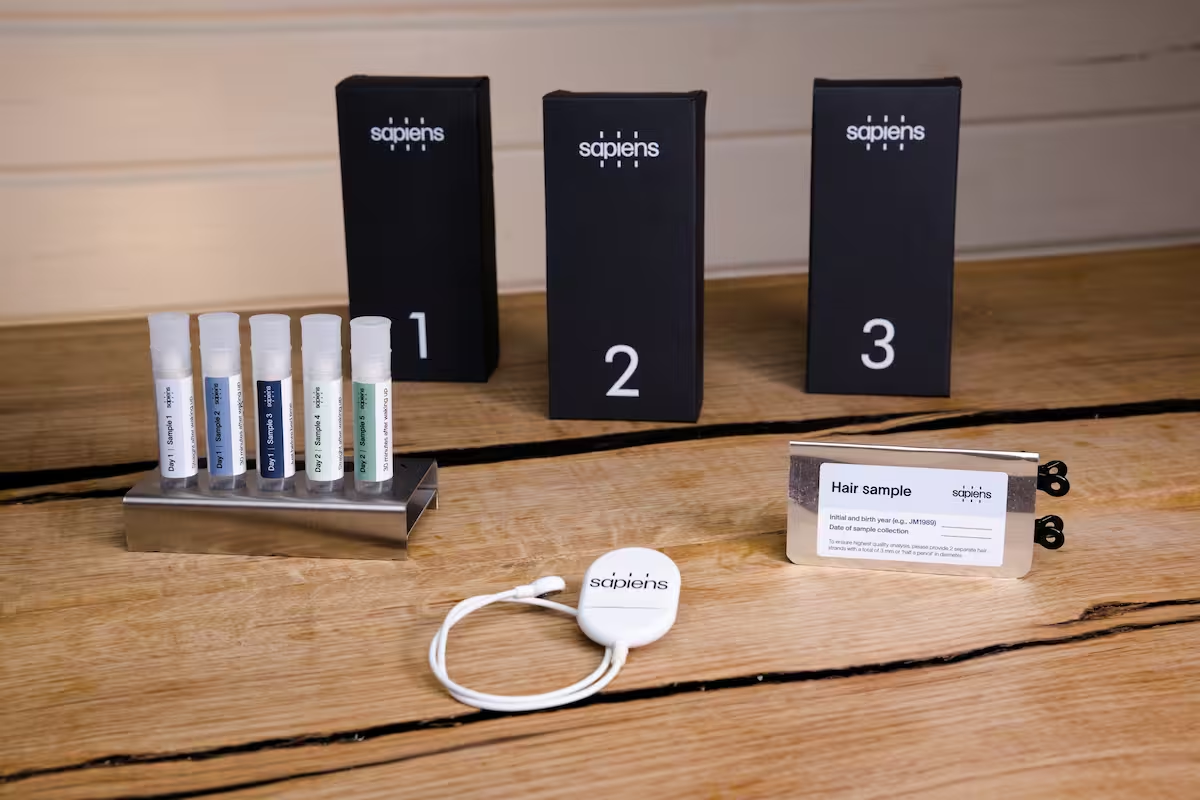
Before and after our 3 to 6 months executive human performance programs, we apply the Sapiens Stress Diagnostics Kit to measure program impact.

The diagnostics kit has been developed together with Professor Dr. Clemens Kirschbaum who brings 40+ years in biopsychology and is an expert in stress diagnostics.

Our diagnostic employs a multi-modal approach, leveraging over 13 biomarkers and 5 scientifically validated self-assessments. This process generates more than 250 data points, providing a detailed and nuanced picture of stress and its effects on your body and mind.

We are currently working on a scientific publication with pre-/post data of large programs. Until that study with control for confounding variables, we are providing an initial overview of typical results of selected clients in the below review of impact areas.

Biomarkers used for measuring program impact

Hair Analysis: Provides a biological view of chronic stress and resilience factors with a three-month retrospective perspective. This includes measuring Cortisol, Cortisone, DHEA, Testosterone, and Endocannabinoids to give a comprehensive picture of stress over time.

ECG Monitor: Offers highly accurate HRV (Heart Rate Variability) analysis over the course of a workweek, far surpassing the precision of traditional wearable devices. This allows for minute-by-minute tracking of stress levels, seamlessly integrated with your calendar and daily activities for contextual insights.

Saliva Analysis: Delivers insights into daily hormonal patterns, such as your ability to ramp up energy levels after waking and wind down in the evening. This is achieved through multi-day, multi-time-point measurements of saliva cortisol and in some situations DHEA levels.

Self-assessments used for measuring program impact

Perceived Stress Score: Measures your subjective experience of stress and its impact on your life.

Perceived Fatigue Scale: Identify markers of fatigue and exhaustion.

Brief Resilience Scale and Brief Resilience Coping Scale: Assess your ability to recover from stress and cope with challenges effectively.

Energy Leak Assessment: Evaluates symptoms related to 15 common “energy leaks,” such as metabolic health, dehydration, micronutrient deficiencies, and lifestyle fragmentation.

Resilience Habits Assessment: Examines key habits influencing resilience, including sleep, nutrition, fitness, social connections, and mindset.

Depending on the results of the above scales, we also offer deep-dive scales like the Burnout Assessment Tool, the AVEM scale to identify workstyles that are correlated with burnout, as well as anxiety and depression scales.

Typical program impact

Using biomarkers and self-assessment tools, we have carefully tracked and measured the outcomes of our program, focusing on chronic stress, resilience, and overall energy levels.

Chronic Stress Reduction

Participants experienced a substantial reduction in chronic stress, with biological stress markers decreasing typically by 22% (full study to be published, that’s why we are only providing these preliminary data for now).

To measure this, we analyzed 3cm hair samples (Cortisone, Cortisol, and DHEA) from 16 clients over periods ranging from 5 to 8 months. Hair steroid analysis offers a retrospective view of approximately three months of stress levels, as hair grows around 1 cm per month. The labortory analysis was conducted by Dresden Lab Service GmbH under the supervision of Professor Dr. Clemens Kirschbaum.

We observed significant variations among individual clients; those initially presenting high stress levels showed the most notable improvements, whereas individuals with already moderate or lower levels showed minimal changes. While excessively low cortisol levels can potentially contribute to increased fatigue, the majority of our clients started with elevated cortisol, making reductions largely beneficial.

Additionally, perceived stress levels also improved significantly, with an average reduction of 23%. To evaluate this, we used the scientifically validated Perceived Stress Scale (PSS-4, see reference here), which involves participants rating their perceived stress on a 5-point scale before and after the program. On average, this translated to about a one-point improvement per question, reflecting a meaningful decrease in the perception of chronic stress.

Hair Cortisol Analysis has been validated by scientific studies and is commonly used in stress research settings.

  • Pilot study of adrenal steroid hormones in hair as an indicator of chronic mental and physical stress: Kirschbaum et al., 2016
  • Hair Measurements of Cortisol, DHEA, and DHEA to Cortisol Ratio as Biomarkers of Chronic Stress among People Living with HIV in China: Known-Group Validation: Qiao et al., 2017
  • Hair cortisol and self-reported stress in healthy, working adults: Gidlow et al., 2015
  • Detection of cortisone levels in human hair seems validated: Raul et al., 2004
  • Analysis of cortisol in hair - state of the art and future directions: Kirschbaum & Stadler, 2012

Resilience

Our clients typically demonstrate an increase in a composite score of resilience factors of 20%.

As resilience is context-dependent and difficult to assess in one marker, we are measuring selected biological and psychological resilience factors. While this approach does not cover all aspects of resilience it is one of the most comprehensive resilience factor measurements in the market.

The 4 resilience factors that were measured are:

  • Hair Steroid & Endocannabinoid Analysis
    • Endocannabinoids in 3 cm hair
    • DHEA/Cortisone ratio in 3cm hair
  • ECG Monitoring
    • HRV Analysis for 5 workdays
  • Self-assessed resilience
    • Brief Resilience Scale (2 selected items)
Hair DHEA/Cortisone Ratio

We particularly focused on the DHEA/Cortisone. DHEA is a critical hormone that balances stress responses, supports mood, protects brain function, and enhances vitality, thereby strengthening resilience. High-quality scientific studies, including Dutheil et al. (2021) and Yan Hu et al. (2000), confirm the importance of adequate DHEA levels in buffering stress-related negative impacts like anxiety and depression. We used Cortisone for this marker instead of a potentially more obvious choice, cortisol as cortisone is less prone to contamination by external products (like steroid containing cremes). Further studies indicating the stress buffering effects of DHEA:

  • Lower levels of DHEA-S are associated with higher serum cortisol levels (Osei et al., 2022)
  • DHEA administration reversed stress-induced inhibition in body weight gain, adrenal weight, glucocorticoid receptor levels, and lipid peroxidation in rats (Yan Hu et al., 2000)
  • DHEA treatment resulted in higher salivary concentrations of DHEA and DHEAS and enhanced anabolic balance throughout sustained military stress (Taylor et al., 2012)
  • The Cortisol/DHEA-S ratio, is related to mood disturbance and perceived stress (Cruess et al., 1999)
Hair Endocannbinoids

Similarly, endocannabinoids (ECs) play essential roles in regulating stress responses, emotional processing (Hill & Lee, 2016), pain regulation (Lu & Mackie, 2016), regulating appetite, energy balance (Drummen et al., 2020), sleep (Kesner & Lovinger, 2020), and immune responses (Rahaman & Ganguly, 2021). Elevated EC levels, such as Anandamide, indicate greater resilience and effective stress management, supported by studies from Morena et al., 2015 and Mayo et al. (2020).

ECs are markers that reflect how we respond to stress and how it impacts us. In particular, AEA and PEA appear to be directly linked to resilience. Lower levels of AEA in hair may indicate a chronically stressed state, suggesting reduced effectiveness in handling new stressors.

Additionally, habits that promote resilience, such as exercise, have been shown to increase AEA levels, providing further evidence of its role in stress management. Several studies have also demonstrated a positive correlation between PEA and resilience. Moreover, treatment with PEA has shown initial signs of having antidepressant effects, supporting its potential role in building resilience.

While chronic stress has been associated with decreased levels of SEA and OEA, there is currently insufficient evidence to directly link them to resilience. However, due to their connections with anxiety and pro-social behavior, they may still contribute to an individual's overall resilience.

Given the above findings, we created a hair endocannabiod score including 3 endocannabinoids (AEA, 2-AG, PEA) that show highest correlation to resilience-related concepts based on a scientific literature review. We left out SEA and OEA due to insufficient evidence.

  1. Anandamide (AEA): AEA is a key neurotransmitter that activates the ECS. Its levels typically decrease during stress but return to normal once the stress subsides. However, during chronic stress, baseline AEA levels are reduced (Morena et al., 2015). Higher AEA levels have been linked to greater stress resilience in individuals (Mayo et al., 2020). Exercise has also been shown to increase AEA levels (Tam et al., 2021).
  2. 2-Arachidonoylglycerol (2-AG): 2-AG has a delayed response, becoming active toward the end of a stressful event. Unlike AEA, 2-AG levels increase in response to stress (Morena et al., 2015). There also appears to be an indication that early life stress leads to elevated levels of 2-AG (Koenig et al., 2018, Behnke et al., 2020)
  3. N-palmitoylethanolamide (PEA): PEA levels also decline in response to chronic stress and are positively correlated with resilience (Biener et al., 2024).
ECG Monitoring

We further assessed resilience by monitoring sleep quality and daily stress recovery through ECG using Firstbeat devices. Participants’ sleep quality improved by an average of 18%, and daytime heart-rate variability (HRV)—an indicator of stress recovery—increased by 24% (see whitepaper on measurement technique here). These improvements were tracked across representative workweeks (no infection and intercontinental flight 5 days prior to measurement period as well as ‘representative amounts of travel), ensuring accuracy and reliability. Sleep quality was assessed using the Firstbeat ECG monitor and using an approach as outlined in this whitepaper. As HRV scores have limitations regarding the person-to-person comparison, for the resilience score we considered multiple HRV parameters such as HRV variation as well as day-time and night-time HRV.

Self-Assess Resilience

In addition, we used validated self-assessment tools specifically designed to measure resilience: the Brief Resilience Scale  and the Resilience Coping Scale for Adults. The Brief Resilience Scale evaluates participants' ability to bounce back from stress and adversity, while the Resilience Coping Scale assesses their coping strategies and resilience-enhancing behaviors. Selected elements fro these questionnaires were completed before and after the program, providing valuable insights into how participants' perceptions and coping mechanisms evolved alongside biological improvements.

Energy Leaks

Participants also reported a significant reduction in "energy leaks," with symptoms related to physiological, cognitive, and emotional energy drains typically decreasing by around 20%. We assessed over 70 symptoms across 13 common categories such as metabolic health, hydration, and gut health (using this self-assessment). Participants completed an online assessment before and after the program. Following program participation, individuals reported on average 20% fewer energy-related symptoms.

Attention Regulation

We have started implementing multiple measures of attention in our diagnostics. The results are still coming in for a composite attention regulation score involving dynamic cognitive testing as well as self-assessment of attention regulation skills. Until we have analyzed all results from the Sapiens Diagnostics on Attention Regulation, we are assuming a 16% improvement on a composite attention regulation score of a Sapiens program participants that is engaged in the program and puts mindfulness-based and attention regulation training in place. This number is estimated based on a Randomized Control Trial measuring the impact of short-term meditation training on attention and self-regulation (Tang et al., 2007).

With our Sapiens Stress Diagnostics, we measure these elements of attention regulation:

  • Sustained Attention - Sustained Attention refers to the ability to maintain focus and concentration on a specific task or stimulus over an extended period, despite potential internal distractions or fatigue.
    • We measure this with the Self-Regulation Scale by Schwarzer, Diehl, & Schmitz, 1999
      • “I usually have a whole bunch of thoughts and feelings that interfere with my ability to work in a focused way.”
      • “I can concentrate on one activity for a long time, if necessary.”
  • Distractability - Distractibility refers to the tendency to be easily diverted or interrupted by irrelevant external stimuli or distractions, impairing one’s ability to maintain focus on the primary task.
    • We meausure this with the Stroop Test as well as the Self-Regulation Scale with questions such as the Attentional Control Scale (ACS) by Derryberry & Reed, 2002
      • “It’s very hard for me to concentrate on a difficult task when there are noises around.”
      • “I have a hard time keeping my attention focused when I’m interrupted.”
  • Cognitive Flexibility - it refers to the ability to redirect focus from one task or stimulus to another efficiently.
    • We measure this by the Attentional Control Scale (ACS) by Derryberry & Reed, 2002
      • “I can easily shift my attention between different activities.”
      • After being interrupted or distracted, I can easilyshift my attention back to what I was doing before.”
Note on the provided program metrics
These outcomes represent preliminary findings. It's important to acknowledge that participants who volunteered for detailed assessments may have been particularly motivated toward behavior change, potentially influencing overall results. A total of 46 clients participated, although not all completed every assessment measure. Continued research and data collection will further validate and refine these impactful findings.
Resilience

Stress resilience improves impact

“I remain much calmer under pressure and am less likely to react in ways I later regret.”

We help our clients measurably reduce chronic stress, enhancing their ability to adapt to stressors. As a result, they report significant improvements in creativity, empathy, and complex decision-making.

Organizations we work with benefit not only from reduced absenteeism and lower talent turnover, but more importantly, from heightened leadership impact and improved overall employee performance.

How we measure stress and stress resilience

Clients who join our 3- to 6-month programs typically achieve measurable improvements in the following stress-related markers:

Chronic stress

  • Biological Stress Markers: We measure key indicators such as cortisone, cortisol, DHEA, and partially testosterone through hair analysis;
  • Self-Perceived Chronic Stress: Assessed using the scientifically validated Perceived Stress Scale (PSS).

Resilience

  • Biological Resilience Factors: Assessed through ECG monitoring and HRV (Heart Rate Variability) analysis, along with hair-based measurements of endocannabinoids and DHEA;
  • Self-Perceived Resilience: Evaluated using the Brief Resilience Scale and Brief Resilience Coping Scales, both validated by scientific research.

The figures provided reflect sample results achieved by small client groups during our programs. A comprehensive research study involving all participants is currently underway, with results expected to be published soon.

Clarify goals

Clarify your goals and uncover what is holding you back

The first step of your coaching journey is to understand your work and life aspirations, identify current obstacles, and set measurable goals regarding your health and performance.


Set your aspiration

What areas of your health, energy, and performance would you like to improve to live and work better? Consider goals like:

  • Reducing procrastination
  • Enhancing creativity
  • Lowering fatigue
  • Minimizing health risks from chronic stress
  • Preventing burnout


Uncover your internal obstacles and leverage personal motivators

You’ve likely worked on your goals and aspirations before, but staying committed can be challenging as life gets busier. Together, we will explore what truly matters to you, uncover stress habits that might hold you back, and build on the strengths and insights you already have. This will allow you to create sustainable and long-lasting change for yourself.


Set measurable goals

You will break down your aspirations with your coach into smaller, measurable goals. For example, if you aspire to be more present with others and minimize mental fragmentation, we’ll translate these into clear, actionable steps:

Be more present with people 

  • How can I block distracting thoughts while I am in a conversation?
  • How can I better remember what people told me two weeks after our conversation?

Reduce fragmentation 

  • How can I get into a daily deep-work mode for 90 minutes?
  • How can I limit social media distractions to 15 minutes per day?

Diagnostics

Measure what anchors your performance

Our industry leading stress diagnostics creates a complete picture of your energy leaks, resilience factors, chronic stress levels and stress drivers. You receive a simple diagnostics kit at-home which includes hair steroid analysis, ECG monitoring, circadian saliva profile and a self-assessment. You receive a personal report and in a 1:1 debrief with your coach you interpret the 250+ data points  to set personal priorities and action plan to raise your performance and health while reducing your stress.

Do N=1 experiments

Find the interventions that work best for you

Using your aspirations, internal obstacles, and stress diagnostics report, we will design small, actionable experiments, which you will implement in two-week cycles with the help of your coach. Each experiment includes specific metrics to assess its impact, following an ‘N-of-1 clinical trial’ approach for tailored evaluation.

Example: If you aspire to reduce stress, your experiment program could look like this.

Weeks 1 & 2: Work-Home Transition

Goal: Create a structured work-to-home transition to improve recovery after work hours.

Biomarkers: Recovery rate percentage after work measured by ECG monitor and evening cortisol levels.

Weeks 3 & 4: Sleep Quality

Goal: Improve sleep quality by establishing an evening ritual and eating the last meal at least 4 hours before bed.

Biomarkers: Resting heart rate before bedtime and recovery rate percentage during sleep, tracked by ECG monitor.

Weeks 5 & 6: Weekend Recovery

Goal: Maximize nervous system recovery over the weekend by fully disconnecting from work.

Biomarkers: The recovery rate percentage during weekends is measured with an ECG monitor and the weekend email open rate.

Energy

Reducing stress frees up energy

“I no longer feel fatigued when finishing the work day, which allows me to be more present with my kids.”

Many clients report feeling less scattered and fatigued after their workday, which allows them to be more present with their families and enjoy their free time.

Corporations report significant boosts in employee energy following our programs, resulting in improved emotional regulation, stronger team collaboration, and increased productivity.

How we measure energy levels

While increased energy is a subjective experience reported by our clients, we track the underlying contributors through measurable biomarkers:

Day-time recovery

  • Morning Ramp-Up and Evening Down-Regulation: Our partner laboratory analyzes cortisol and alpha-amylase levels from saliva samples collected at precise time points over multiple workdays.
  • Nervous System Recovery: We measure recovery levels via ECG monitoring over a full workweek, assessing recovery during working hours and the ability to “switch off” after work.

Sleep quality

  • Sleep Recovery: We assess the percentage of recovery during sleep through ECG monitoring and identify specific factors influencing sleep quality.

Cognitive energy

  • Cognitive performance assessment: We test cognitive performance factors, including memory, reaction time, and executive control, to evaluate and enhance clients' cognitive energy levels.

Habit Change

Calibrate your daily routines

Personal Experiments

2-week experiments of life- andworkstyle changes with 1:1 debrief

Accountability Calls

Peer-accountability calls andcheck-ins on team habits

Expert Counseling

1:1 or group counseling, e.g., blood test withMD debrief, nutritionist, sleep expert

Impact Diagnostics

Repeat diagnostics 3-6 months laterand to refine your action plan

Integrate habits

Integrate the most effective interventions into your busy schedule

At the end of the 3 to 6-month period, we will repeat the full-spectrum stress diagnostics, using all relevant biomarkers to pinpoint which experiments impacted your goals most. This includes a 3-month retrospective assessment of chronic stress through hair cortisol and cortisone levels, offering insight into the overall effects on chronic stress levels. 

With your coach, you will develop a personalized work and lifestyle playbook for achieving your goals with sustainable performance habits and a backup plan for managing periods of high stress or increased workload.

Boost your performance with 5 science-backed tips tailored to your intense schedule

Enter your work email address and receive 5 proven human performance tactics every month. No ads, only science-based insights.

Measure biomarkers

Measure your baseline and track intervention results

Once your goals are set, we identify relevant biomarkers to guide your journey. Often, we use our stress diagnostics kit, which measures over 13 biomarkers and includes multiple self-assessments, generating 200+ data points. This assessment establishes a baseline and pinpoints specific areas for intervention. You can view an example report here.

We also use lab blood tests, sensor analytics, and additional assessments to establish a baseline and identify key areas for targeted intervention. Here is how we make different goals measurable:

Reducing Stress

  • Hair steroid analysis for a 3-month retrospective of cortisone, cortisol, DHEA, and testosterone levels;
  • ECG monitoring to assess nervous system recovery during and after work hours;
  • Sleep tracking and analysis for quality and duration;
  • Self-assessment of stress levels using scientifically validated tools.

Reducing Fragmentation

  • Workstyle metrics, such as task or app switches per day and email frequency;
  • EEG monitoring to track brainwave activity during work hours;
  • Cognitive assessments, including attention network and memory tests.

Building Stronger Health

  • Comprehensive laboratory blood tests;
  • Regular at-home blood tests for key markers (e.g., inflammation levels);
  • Continuous blood glucose monitoring.

01 - Recognize

Learn to recognize body signals early to stay ahead of stress

Gain insight into your reactions and impulses that arise under pressure by analyzing body data.


You can’t manage what you don’t measure

How you show up each day – what we call your ‘state’ – is one of the most critical success factors in demanding roles. Yet, many senior executives leave it entirely unmanaged.

Many executives rush into meetings focused solely on the work at hand rather than creating the optimal state for themselves and their teams to drive success.

Managing your state starts with awareness of your nervous system, brain, and overall biological patterns.

Shifting from narratives to body literacy

When we ask new clients, “What state are you in right now?” we often hear narratives like, “I’m having a busy time at work, I didn’t sleep well last night, or I have an important board meeting coming up.”

These narratives tend to be familiar stories rather than an accurate assessment of one’s current state. Our first step is to help clients gain a true understanding of their internal state through tapping into body data. They begin to act as ‘sommeliers’ of their own bodies, becoming highly attuned to their physical state in the present moment.

Leveraging cutting-edge diagnostics to enhance self-awareness

We use the most comprehensive stress and performance diagnostics available to assess all factors that anchor and enhance your performance:

  • Workplace stressors: Uncovering factors like a sense of control or social support.
  • Energy drains: Identifying areas such as metabolic health, dehydration, micro-nutrient deficiencies, and cognitive overload.
  • Resilience capacity and habits: Assessing your capacity to handle stress and the habits that support or detract from it.
  • Recovery: Monitoring real-time stress and recovery patterns through an ECG monitor integrated with your calendar.
  • Chronic stress: Evaluating long-term stress exposure using hair cortisol analysis.
  • Health impact of long-term stress: Gauging daily stress patterns through saliva cortisol, which is linked to mental health and overall well-being.

Most wearables and health technologies outsource self-awareness to a device. Our diagnostic solutions, however, together with the integrated coaching, are designed to empower deeper, personal self-awareness.

04 - Reduce

Reduce your top energy drains

Identify hidden stressors and tackle root causes through science-based, data-driven experiments.


No relentless self-optimization, but self-synchronization 

Our clients are senior executives and high performers who already have what it takes to excel in the most demanding business environments. Yet, many find themselves unintentionally getting in their own way.

Their intense workstyles and periods of pressure often lead to stress-driven habits, like late-night sugar intake, excessive caffeine, irregular sleep, or moving too little. These stress habits create internal stressors or energy drains, such as suboptimal metabolic health, circadian rhythm misalignment, nutrient deficiencies, muscle imbalances, and chronic tension.

Over time, these energy drains elevate cortisol levels and fuel chronic stress, creating a vicious cycle of job strain, stress habits, and escalating energy depletion.

Identify energy drains that contribute most to chronic stress

We have identified the 15 most prevalent energy drains among our high-performing executive clients.

Using self-assessments, consultations with our team of medical professionals, and detailed diagnostics, we pinpoint your personal energy drains that have the most impact on your chronic stress.

Address your major energy drains one step at a time

Rather than offering generic health advice or overwhelming you with self-improvement tips, we provide highly personalized support, addressing your top energy drains with small, targeted interventions.

Example: One client identified ‘blood sugar dysregulation’ as a major driver of chronic stress, causing significant fluctuations in energy and focus throughout the workday.

To address this, we implemented a series of small, measurable experiments, using a continuous glucose monitor and ECG to assess both blood sugar and acute stress levels. For this client, we created the following program:

  • Weeks 1 & 2: Shift from a carbohydrate-based to a protein-based breakfast.
  • Weeks 3 & 4: Take a 5-minute walk after a carb-heavy lunch.
  • Weeks 5 & 6: Replace sweet snacks with savory options, keeping ready-packed nuts and vegetables on hand.

Once we achieved stable blood sugar levels, we moved on to the next identified energy leak: optimizing micronutrient levels.

03 - Regulate

Regulate your energy and focus to meet the demands of any task

Prepare your body and mind for critical moments by practicing micro-recovery and transition techniques.


Stress isn’t bad, but timing matters

Our nervous system controls every organ in the body and sets our overall level of activation – often referred to as ‘acute stress.’ The body shifts between calm and alert based on perceived urgency and safety.

While stress is often seen as negative, it is actually a powerful enabler of quick thinking and productivity. High activation helps you react swiftly, while low activation fosters creativity, strategic thinking, complex decision-making, and allows you to connect more empathetically and inspire those around you.

Enter the optimal state to achieve your goals

Most of our clients embrace an intense work ethos – which is one of the reasons we love working with them. However, this relentless drive can interfere with achieving an optimal state for their goals, leaving much of their biological potential untapped.

Many are on call 24/7, ready to jump into action and racing from one meeting to the next, spending most of their time in a high activation state. They focus heavily on content and leadership but often overlook the optimal state needed to reach their goals effectively.

In our programs, clients learn to regulate their state to match their objectives. For example, a high-activation or alert state (sympathetic nervous system) is perfect for tackling 50 emails in 15 minutes. However, this same state can hinder creativity or complex decision-making.

Our clients learn to shift between high and low activation states on demand, transitioning smoothly between meetings. They use tools such as breathwork, visualization, body tension adjustments, and shifting attention between external and internal focus to regulate their state.

What got you here, won’t get you there

Most of our clients face a dilemma as they advance in their careers: early on, they rose through the ranks by operating in a high-activation state – always on, moving quickly, getting things done. This fast-paced approach helped them excel in linear work.

However, to truly thrive in senior executive roles, a low-activation state is needed most of the time. This allows executives to inspire others, lead authentically, make complex and impactful decisions, foster innovation, and support their teams with empathy and client-centered insight.

By learning to down-regulate their nervous systems, our senior clients are better able to focus on what truly drives their success, creating more meaningful impact and achieving a balanced life aligned with their aspirations.

Synchronize your calendar with your circadian rhythm

To increase the likelihood of being in the optimal state for their tasks at hand, we help our clients measure their circadian rhythm through cortisol saliva tests over a workweek. We then help them align schedules and daily routines with their unique biological rhythm.

02 - Reinforce

Synchronize your work and lifestyle with your natural rhythms

Adopt small lifestyle tweaks in your most impactful intervention areas such as calendar management, recovery, movement, nutrition, self-regulation, and cognitive regeneration.


Review your daily work and lifestyle routines based on your body data

Once our clients have mastered to recognize and regulate their state and reduced their primary energy drains, we can focus on optimizing their overall energy levels and health.

We begin by assessing how current routines impact resilience, stress, and personal goals. Then we identify small adjustments in different intervention areas to shift from a stress-inducing lifestyle to one that aligns daily routines with each person’s biology and natural rhythms.

Get the right experts for personalized interventions

The health and lifestyle tips from your favorite Instagram influencer often aren’t suited to your unique biology.

We connect you with PhD-level experts to help you optimize six key lifestyle factors that most influence chronic stress and resilience, targeting intervention areas where small, immediate changes can lead to significant results.

Self-assessment

Identify and address your top 3 energy drains.

In less than 5 minutes, you can find what limits your resilience and contributes to chronic stress. You will receive a report and a toolkit with personalized strategies to address your top 3 energy drains delivered to your inbox for free.

Boost your performance with 5 science-backed tips tailored to your intense schedule

Enter your work email address and receive 5 proven human performance tactics every month. No ads, only science-based insights.

Health

Strengthening health and longevity

“I used to worry about burnout, but now I know how to maintain high productivity without compromising my health.”

Together with medical doctors, we support clients in improving their overall health, including gut, metabolic, and musculoskeletal health. This leads to improved well-being and quality of life.

For employers, improved employee health leads to greater engagement and significantly reduced sick days.

How we measure health levels

While increased energy is a subjective experience reported by our clients, we track the underlying contributors through measurable biomarkers:

Energy levels

  • Energy assessment: We evaluate 70 symptoms across 15 common areas of potential energy drains, including hydration, gut health, and fragmentation.

Metabolic health

  • Glucose: Continuous Glucose Monitors (CGMs) track blood glucose fluctuations, which we combine with ECG monitoring to assess how stress levels may influence eating behaviors and blood glucose stability.
  • Inflammation: We measure inflammation levels using blood markers like hs-CRP through lab-based and at-home blood tests.
  • Blood sugar levels: We evaluate metabolic health markers, including HbA1C and the HOMA-Index, to evaluate average blood sugar levels and insulin sensitivity.

Micro-nutrients

  • Nutrition levels: We assess vitamin and mineral levels through blood tests at partner laboratories to ensure the body has the essential nutrients required to cope with the demands of high workloads and stress effectively.

Comprehensive health assessments

  • Heath audit: For selected clients, we collaborate with third-party laboratories to provide comprehensive blood tests and health assessments.

Workshop examples

A better way to manage team energy and operate under pressure

Our workshops are customized based on your teams data. Below some example modules from previous clients

Workshop Module 01 - Body regulation for critical work situations

Use biofeedback technology to monitor and regulate your body, emotions, and mind in high-pressure situations – see sample outline here.

Workshop Module 02 - Address your team’s top 3 energy leaks

Identify your team's main physiological, emotional, and cognitive energy leaks and develop actionable strategies to address them.

Workshop Module 03 - Redesign team habits for sustainable performance

Leverage stress data to identify team habits and align the team calendar to minimize strain.

Newsletter

5 monthly tactics for more energy

You get the essence of what we learn from measuring stress and health for thousands of people in intense jobs. 5 monthly tactics to raise your energy, resilience and health. We never sent advertisements.

Toolkit

Get 5 proven tactics for resilience

You get the essence of what we learn from measuring stress and health for thousands of people in intense jobs. 5 monthly tactics to raise your energy, resilience and health. We never sent advertisements.

Newsletter

5 monthly tactics for more energy

You get the essence of what we learn from measuring stress and health for thousands of people in intense jobs. 5 monthly tactics to raise your energy, resilience and health. We never sent advertisements.

Toolkit

Get 5 proven tactics for resilience

You get the essence of what we learn from measuring stress and health for thousands of people in intense jobs. 5 monthly tactics to raise your energy, resilience and health. We never sent advertisements.